Recent Posts

Showing posts with label students. children. Show all posts

Friday, September 2, 2011

Simple Joys of the Profession

A student sent me a message through Facebook this week telling me that her class won in the speech choir competition in celebration of the National Language Month.

And snore while doing it.
She told me that the class thought that I would have been proud if I was there when they won. She added that the class was more cooperative and they attribute this success to me during our own theater presentation practices last year. She ended with thanking me for being a part of their success now.

Oh my god, a fuckin' student remembers me... *hysteria*
Upon reading this, I was elated that even if a year has already passed, these students from the only pilot class I handled last year still appreciate and thank me for their success. But upon reading and rereading the message, I became sadder and sadder.

And was in denial.
It was because I hoped that they became champion when they were still my students last year, I hope that I was their teacher who won with them, I hoped that their success could directly be attributed to me. But no, I was only one of their many pit stops before they reach their finish line this year under another subject; another teacher.

But still, I comfort myself to the fact that they thought of me during their time of success, and one, one actually found the time to thank me not only for their success, but for the improvement of the whole class.

Wednesday, August 31, 2011

A Lost Generation

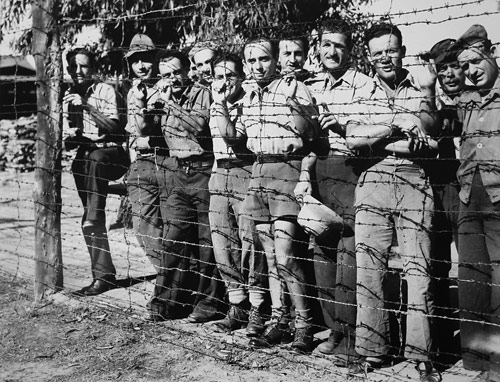
I am reading Anne Frank's "The Diary of a Young Girl" and I must say that though it was a tedious read (it's a diary, after all), I think it is a gem.


History through the eyes of someone the same age as my students.


And if it takes a war to come up with a masterpiece like this. I wouldn't mind another war.


I wouldn't mind another war just for the kids today to realize that they are totally fine.
Don't shoot me for saying what I just said.


I always wondered how my students would react if they were put into a situation like Anne. Would they write a diary? Would they study while in hiding? Would they still flirt? Or would they still whine and complain that things are not going their way? I always thought that my students are sheltered spoiled brats that even if they already have all the material things their parents could provide them, still, they are angry.  These children leave the school without their parents and they come home without their parents. They only have their parents' mobile number or Yahoo messenger account, which are poor substitute for flesh and blood parents. These children do not have any direction at all. They're just screaming for help, their angst are their unshed tears, their rowdiness are their imploded frustrations, and they are angry. They are bored, and they do not know what to do with their lives.


But still, I wonder how they would react if we are living in a war. Would a war change their perspective? Would it make them realize that what they're whining about do not even measure up to the sufferings of children who experienced wars?


This generation is a lost generation, and if we need a war to shake these children up into responsibility and discipline. Then let it be.

Tuesday, June 7, 2011

From the Old Notebook: K - 12 Education


Like what the title says, this essay was written two years ago during the hoopla that was the K-12 education. Apparently, the issue became a bigger hoopla because the curriculum will now be implemented this school year.


Who is tired of studying for fourteen or more straight years? I am. I am because I feel that my brain is so ready to explode right after I throw myself out of college. As for my parents, I can feel their tired sigh as I will finally stop draining their wallets.

You have to admit it, education is one wallet killer.

Formal schooling is a very long and rigid process of educating oneself, and I can actually measure that it is indeed very long, since I grew up studying and living in one place, my dear dear city. I saw the neighbors’ children grow up, I saw changes in the houses, and I saw my neighborhood grow in terms of population, as the said neighbors kept on sharing the night with their spouses. Bottomline? I am growing up, everybody’s growing up, and I am still studying. Some of my contemporaries stopped schooling altogether, and CHOSE to be an out-of-school youth. Their reason? Aside from the obvious, which is that they don't have money, the other reason is the length. Is ten years of Basic Ed that long? They didn’t even try to finish secondary school. I was thinking that maybe they were including college in the count which strengthened the discouragement and disinterest among them and their parents. Elementary and high school is already too long, we can’t bear college anymore, they say, they think that the time spent in school should be spent for working and not for studying. This inclusion of college in the count reflects the mentality that if a person didn’t finish college, then that person will never be able to get a professional job, pushing that person to pursue blue-collared jobs or to be part of the informal sector of the workforce. This is exactly what happened to my contemporaries, they stopped schooling, and are now working. This situation, for me, is not a bad thing, as a person does not need a degree to be a worker, he or she only needs skills appropriate to the job, or he or she can establish a business where he or she will have the income needed. There’s no need to be a summa cum laude to be a gazillionaire.


This is f***in sad.

And here is DepEd trying to push for a twelve year basic education program which they think will further the skills and knowledge of the youth, as they believe that Filipinos are already lagging behind other countries in terms of “global competitiveness”. Parents both from private and public schools were enraged by this proposal, as they will have to shell out bigger amounts of money, and in case of the public school folks, they will have to survive another two years of trying to make ends meet. We can’t blame the parents, they think that basic education is already expensive, and they still have college to think of. But hey, let the children find a way to get through college if the family does not have enough or has no money for college education. Don’t babysit a sixteen year old too much.


Christ Jesus. I wouldn't even consider having a child if he looks like him.

Well, I agree to DepEd to the extent that we are lagging behind everybody in terms of economic competitiveness and the respect received from other nationalities. But since the thrust of our government is to make workers and not entrepreneurs out of my countrymen, then I am totally for the two year extension of the basic education, provided that the curriculum will give the students enough skills to land a job or to make jobs (establish a business) even if they only have a high school diploma. An example of which is basic bookkeeping or hands-on training in the different professions, then if they find something interesting while studying, they can decide to further their studies through attending college, or applying what they have learned right after high school. The point here is that students will be ensured that they will have success even just after high school, and that the decision to pursue college education will be on their hands and not on their parents’ mouths.

This, I think, will be a very difficult undertaking, as what I am thinking will wreck the nerves of my country's attitude towards high school graduates and the college diploma. They value education, I know and am proud of that, but we put too much prestige to the college diploma, to the extent that it is already ridiculous, as we scoff at high school graduates, who are, by the way, also educated, and we can’t seem to deviate from the finish-college-and-get-a-job attitude. This attitude will be the major hindrance to the basic education’s extension’s fruition apart from the budget, political, and social will needed for the changes.
Having a job is not the sole source of income, there are millions of other pursuits that can make us get that dream car, dream house, and dream life. I am telling you this: economically speaking, the completion of both basic and tertiary education is not the sole ticket to success.

I am not saying that we must all dropout from high school or college. We are all unique individuals, and if our formula for success is finishing just high school or both high school and college, then I don’t have any issue, as our triumphs will depend on our choices. What was given here is a vision for the educational system, and probably even for our society.

Sunday, June 5, 2011

The Highest and Lowest Points in Teaching


This essay was submitted in partial fulfillment of the requirements in one of my education courses back in college. I felt a need of documenting how my beliefs are changing. And ideologically, I am going strong. Still, it's nice to look at my essays during these times. It feels so naive yet idealistic at the same time.

Some teachers say that they find joy in teaching. Honestly, I believe them in a sense. There is always a sense of fulfillment whenever students learn. Yes, I feel that temporarily, but just to be true to myself, I didn’t have a highest moment in student teaching though I have a lowest.

Teaching is a noble profession?

Call me insensitive, I don’t care. I think that being happy about the performance of the students is something that should be reflected about. Why are we happy with it? Is it because the lesson plan went exactly as we want it to be? Is it because the students are behaved? These are, indeed, factors to be considered, but we should think that when the lesson plan is followed and ALL of the students behaved exactly as we wanted them to be, then we have a problem. The problem is that we make them conform, and conformity is against my very philosophy that I must respect my students’ individual differences. I made them all follow me and I turned them into unthinking robots for a period. Do this, do that. Therefore, I didn’t made them think freely, I didn’t make them make their own meaning. I am just happy with my teaching whenever I sense that they grasped the lesson in different ways. I don’t want to get a high moment from teaching, because I didn’t take Education to make hordes of students make me happy. I teach you; make me happy. That I think is not a good attitude. Teaching did not dawn to humanity to inflate teachers’ egos.


But I'm sure as hell don't want to look too stressed about it...

I also didn’t have a lowest moment in teaching itself, because this would truly affect the atmosphere inside the classroom. I don’t want to enter the classroom depressed and in turn, depressing my students. But I did have a lowest moment in my relationship with the other teachers in school. I like my opinions being questioned, but I don’t like my ideas being blocked, especially if the topic that I’m talking about would surely affect the students like RH Bill. One teacher did it, and I was seething in disguised annoyance. This is only one of the many examples in which schools sometimes kill the positive energy that young teachers bring. If we are so serious in educating our students and making them think, then the school must be an institution of the exchange of ideas not just between students but also between the teachers themselves. The teachers must be the ones who must start a healthy intellectual discourse about pressing issues that will surely have its effect in education. This brings me to my philosophy that teachers themselves must be free to think. If teachers smother each other to prevent them from thinking, then they would do the same to the students. They would just stunt the minds of the students and turn them into a mindless horde.

Some teachers say that they find joy in teaching. Yes, I believe them, as there is always a sense of fulfillment whenever students learn. I am yet to have that highest moment, but I’m not bracing myself, because these same teachers didn’t tell us if schools are havens for thinking, anyway. 

Monday, May 30, 2011

I Am Understanding by Design

This year, our school is going to embark on a journey called "UbD" or Understanding by Design. This thing has been around in a while in America, but here in my country, it was implemented last year in the public schools. But since I am in a private school, it is only now that we are catching up with this UbD fever.


I already heard this UbD when I was still a practicumer in college 2 years ago, and I always thought that it is a sort of planning the lesson but you think of the assessment first. Well, to be frank, I always thought that it's only a different way of writing lesson plans.

I'm as skeptical as skeptical goes.

So here is my school catching up the fever because the Department of Education directed that the schools follow this UbD way of thinking. But it comes with a price, you see. We the members of the faculty feel very cheated of our vacation because we need to spend it doing the UbD templates. And it is such a pain on the ass considering that we need to prepare those lesson plans and we need to implement it already this coming school year. I have always thought that curriculum planning takes years, and lesson planning takes time. But making the teachers rush their lesson plans for compliance is doing the teachers (and students) injustice. If the plan is faulty, then I'm very sure that the execution would also be faulty since the teacher doesn't know what the hell she is doing. And in the long run, the students would just become guinea pigs. Basically, we are doing the lesson plans in the dark. We are just hoping that even if the plan sucks, we would be able to pull off the execution right.

My students and I are all guinea pigs.
Yes, there have been seminars, but most of it didn't really help us at all. If it did, it only caused confusion and resentment among the faculty and the administration. We have this certain seminar in the school a couple of days ago, and we invited a speaker from a publishing house to help us tresh out this confusion. Turns out, this speaker have also attended UbD seminars in America with no less than the proponents of UbD themselves. And it was most enlightening, not only did we see the things that we are doing wrong (thanks to the lesson plan critiquing), but it also made us realize that crafting UbD templates and executing it is really just simple. And that simplicity made all the difference.

According to her, all lesson are done with A-Acquisition, M-Meaning-making and T-Transfer. Now, what puzzles me is that if I am going to look at a sample UbD learning guide, it only consists of the days and the things that you are going to do in those days.

Example:

Nutrition (Grade 6) Duration: 2 weeks

Day 1: Begin with an entry question (Can the foods you eat cause pimples?) to hook students into considering the effects of nutrition in their lives. (Making meaning)
Introduce key vocabulary terms and discuss relevant selections from the textbook. (Acquisition)

Day 2: Quiz on key vocabulary terms and selections from the book
Day 3: Students work independently to develop a three-day camp menu for younger children and offer them ideas for breaking bad eating habits


And so on and so forth. The speaker told us that that is the original UbD template. And we were like, "What the f**k?" because what we are doing with our templates is, if we are going to follow this thing strictly, wrong. What we did with our templates is this.

I.    Introduction
II.    Interaction
III.    Integration
IV.    Closure
V. Agreement

And I was like...are we a bunch of sado-masochists here? So I figured this was the f***ing reason why we are having a very hard time devicing our learning plans. We are deliberately making our lives harder. It got me thinking, where in the world did our administrators get their template? They said that it was from FAPE (Fund for Assistance to Private Education), and the speaker admitted that the FAPE template is actually more complicated than the original UbD template. I felt cheated. If we have an easier template, why did they opt to choose the more complicated route? One of my colleagues said that the FAPE template is designed for Catholic schools, but what makes the template so Catholic? What makes it more effective than the original? So we felt all the more cheated by our administrators, why is it that they only scheduled the seminar now? Why only now that some of us (myself included) are already through with our learning plans? They have the whole freaking school year last year to invite that speaker. And now, they only caused confusion among us, and resentment towards our admins.

We're this close to confronting the higher - ups.
 Like our speaker said, "UbD entails us enjoying life, simplifying life," but in my school, it is surely not the case.

Tuesday, April 19, 2011

Teen Sexuality or Catholic Propaganda?

Please.

Do not force me to listen to a teen sexuality seminar with a Catholic conservative as the speaker.
But well, when you are supposed to be with your students, there isn't really much thing for you to do but to fucking bear with all the shit the person has been saying.


I wasn't really able to listen to the seminar from start to finish, more like I was only able to see its middle. But anyway, the part where I am already with my students made me use my brains again. I have been taking notes while the speaker has been babbling about safe and so-called "saved" sex, homosexuality, contraception, RH bill, and abortion. And I have to admit that if I am going to give my students an alternative point on the views presented not only by the speaker but also by their school, then I really have to do my homework. And that includes being discreet about it.

As much as I want to, I didn't finish watching the seminar, as my period with the class that I am accompanying already ended. But I was able to scrape very yummy topics that I planned to discuss with them the next day.

Here it is:

"What is morality?"
"What should be our standards of morality?"
"Who/What should tell us what is moral?"
"Is there even such a thing as morality?"
"Is it fair to call gays sinners?"
"Why is the youth turning on to media for information about sex?"
"When does life begin?"
"What really is sanctity of life?"

I asked these 14-year olds whether there was any of their teachers who tried to process the things that they learned in the seminar. A resounding no. I also asked them if they took down notes or questions. Again, a resounding no. Well, the latter didn't surprise me at all, because they were just in that seminar so there would be no classes, and besides, it's not like the priests are dating them for their brains anyway, so I started with my discussion.

First question: Is it fair to call gays sinners?


Well, most of them said, that it is not fair to call gays sinners (and I really thank them for thinking so, at least they can sense that sometimes, their religion is bullshitting them about gays). What made these church people think that these gays are sinners? One brave boy told the class that there is nothing intrinsically wrong with being a gay, the issue of the church with gay people is that man and woman were created for the opposite sex. I told them that gays eat, sleep, drink, walk, buy medicine from a drugstore and so as with straight people. So what's wrong with being gay?

Second: What should be our standards of morality?
This has been a gray area for them, they can't say anything because they are young, and I can't say anything too provocative either. So I let them decide. Thankfully, there was another brave boy who contributed to the discussion that there shouldn't be any standards because what is immoral to one might be just fine for another. A dangerous relativist in the making, I thought. But I told them that morality shouldn't be based on scriptures or doctrinal moral prescriptions and that they should adhere to the universal virtues.

So far, I was succeeding in taking my real perspective undercover while feeding these students the other side of the coin.

Third: Why is the youth turning to media for information about sex?


If my memory doesn't fail me, nobody was able to answer this. But I asked them again if their parents talk about them about sex. Again, a no, but one student was cocky enough to say sometimes. Anyway, whenever I meet parents and ask them if they talk to their children about sex, well, they always answer me with a smile and a shake of the head which is natural, given that sex is a taboo topic, and here in this place, teen sexuality is a kitsch. And asking these students if their school gives them enough information about sex is out of the question, they are in a Catholic school, so by default, nothing about sex.

So I asked them, "No info about sex at home and nothing in school. Where would you go?" Media came as the answer. And I added, "Of course, also from your friends, whose knowledge of sex may be faulty enough to get you into trouble."

This is where I inserted the debate about the RH bill. I told them that we cannot blame the State for doing its job, it is only providing basic services. And that basic service is health. Specifically, the State is targeting health of the mother who spends more energy in producing offsprings. The State knows that the youth and the general public do not have the information that will help them about sex, there is nothing in their homes, there is nothing in the schools, and that is where State enters the picture.

Of course, I also have to criticize the Church, so I added, "If these religious people are so against sex education in schools, why not FORCE the parents to talk to their children about sex in the first place? That would lessen their stress." I told them to require their parents to talk to them about sex, its only a matter of choice between their parents and the erroneous depiction of sex in the media. Choose. If they wouldn't be able to get it from their parents; they wouldn't get it anywhere.

Fourth: When does life begin?


These students are very factual, so they told me that for the Pro-RH bill people, life begins at implantation while for the Anti-RH people, life begins in fertilization. I told them that I believe neither and that the two sides are actually pieces of bullshit. If these people are saying that we can pinpoint when life begins, then there is something wrong with our bodies. Imagine this, if life begins in fertilization, then it means that the egg cell and the sperm cell aren't alive! And if they aren't alive, then there is something wrong with our bodies! How come that something that doesn't have a life actually resides in a breathing human body? It's like saying that the DVD player is working fine, except for its laser reader. I argued that we can never pinpoint when life begins. Their lives where passed on to them by their parents which they received from their own parents and so on and so forth. Life, therefore, is a continuous process. It goes on and on and on.

Fifth: What is sanctity of life?
For them, this concept means that we should respect human life and we shouldn't go killing an unborn child.
Okay. So I argued that this concept is subjective and in using this concept, I could argue that all of us there in that classroom are murderers.

They agreed that their sperm and egg cells have lives.

So, by extension, the girls, by virtue of menstruation, flush down the toilet a single life every month. And the boys kill 299,999,999 lives in a single moment of ejaculation.

And if we are going to be really consistent with this concept of "sanctity of life", why doesn't it apply to cockroaches? We spray Baygon on them. Why doesn't it apply to rats? We feed them Racumin. Why don't we feel guilt whenever we kill these creatures and to think that, to use their language, they are also "God's creation"?

Therefore, I concluded that we are all murderers in that classroom.

I checked if they were comfortable with what I have been discussing, and they said yes. Though there was one who felt uncomfortable... Well, I took it as a compliment, for I knew that deep inside him, he knew that I was right and he was disturbed by that fact.

But then I asked who among them are in favor of the RH bill. No hands. Anti? Well, majority raised their hands. And I realized that, yes, I was able to make them see the other side of the coin and that they were pleased that I discussed it with them, but my one-hour discussion with them is not enough to break the beliefs that were indoctrinated to them by their school for the past 10-12 years.